Knowing When It Is Time for a New HVAC System
There is a big difference between an HVAC system that needs a repair and one that is simply running out of road.
Homeowners feel that difference before they can always name it. The house takes longer to cool. One bedroom never seems comfortable. The system kicks on, shuts off, then starts again. The utility bill creeps upward even though your habits have not changed much. Then one of the hot spells hits, the kind that puts real strain on equipment, and suddenly you are wondering whether you are dealing with a rough season or the end of your system’s useful life.
That question matters even more in places with hard summer demand. In Pasadena, for example, summer heat is not theoretical. July averages a high of 89.1°F and August averages 91.3°F. Just as important, those months bring a lot of very hot days, with July averaging 15.4 days at or above 90°F and August averaging 19.4 such days. When a cooling system has to work through that kind of weather, small weaknesses stop being small. Marginal performance gets exposed quickly.
A lot of people wait for a complete breakdown before they think seriously about replacement. Sometimes that is understandable. HVAC equipment is expensive, and a repair often feels like the more reasonable move in the moment. But a system usually gives warning signs before it quits altogether. Knowing how to read those signs can save money, reduce stress, and help you avoid scrambling for emergency HVAC services in the middle of a heat wave.
The first question is not “Can it be repaired?”
Most systems can be repaired, at least once more. That is not always the same as saying they should be.
I have seen homeowners put good money into a unit because the immediate problem looked simple. A capacitor fails, a blower issue pops up, or the system is low on performance and someone offers a fix that gets it running again. For a while, that can be the right call. But there comes a point when every repair is really buying time rather than restoring confidence.
That distinction is important. If you are paying for repairs and still living with uneven temperatures, high bills, or a system that sounds strained every afternoon, the repair is not solving the larger problem. It is just keeping an aging setup on life support.
ENERGY STAR points HVAC tune-up services to several practical replacement signals: equipment older than 10 years, frequent repairs, rising energy bills, and rooms that are too hot or too cold. None of those signs alone is a perfect trigger. Together, they paint a pretty clear picture.
Age matters, but it is not the whole story
Homeowners often ask for a hard rule, something like, “If my system is 12 years old, should I replace it?” The honest answer is that age is a useful clue, not a verdict.
A unit that is older than 10 years deserves a closer look, especially if other problems are showing up. That does not mean every system past that age is finished. Some older systems keep plugging along. But once equipment moves into that range, replacement should become part of the conversation, not a distant idea for another year.
What matters just as much is how the system has lived. Equipment that has had to battle long, hot summers will often show wear sooner than equipment under lighter demand. In an area where there are many days at or above 90°F, air conditioning is not getting occasional use. It is being asked to perform steadily, often during the hottest part of the day when every house on the block wants cooling at once.
Aging equipment under that kind of load becomes less forgiving. Small installation flaws, duct issues, and sizing mistakes that might have gone unnoticed in milder conditions tend to become obvious.
The signs homeowners notice first
The most reliable signs are often not dramatic. They are patterns.
You start adjusting the thermostat more often, trying to coax the same comfort you used to get automatically. The home no longer feels evenly cooled. You notice the system running longer but delivering less. Or you notice the opposite, short bursts of operation that leave the air cool for a moment without ever really settling the house.
These are the signs I would pay attention to:
- The system is more than 10 years old and performance has started slipping.
- Repairs are becoming frequent rather than occasional.
- Energy bills are rising without a clear change in usage.
- Some rooms stay too hot or too cold.
- The system seems to start and stop too often.
That last point deserves more attention than it usually gets. Short cycling, where equipment turns on and off too frequently, is more than an annoyance. ENERGY STAR warns that oversized systems can shorten equipment life because of short cycling. It is hard on components, often leads to uneven comfort, and can leave homeowners confused because the unit technically still runs. A system can be operating and still be failing at its actual job.
Rising bills usually have a story behind them
Higher utility costs are one of the clearest reasons to revisit an older HVAC system. If your bill climbs during peak summer weather, that is not surprising by itself. But if the increase continues even though your habits have stayed fairly consistent, the system may be losing efficiency.
There are several possible causes. Age is one. Installation quality is another. The Department of Energy notes that oversized systems, improper charging, and leaky ducts can reduce efficiency, create comfort problems, and shorten equipment life. That means the equipment itself may not be the only issue. A system that was never properly matched to the house or installed with enough care can underperform for years.
This is where homeowners sometimes get trapped. They blame the age of the equipment when the original sizing or installation was poor, or they assume a new unit alone will solve everything when the ducts are leaking and the airflow problems remain. Both mistakes cost money.
The takeaway is simple. Rising bills are a signal to investigate the whole system, not just the box outside or the unit in the attic or closet.
Uneven temperatures are not something to shrug off
People get used to discomfort in stages. First, one room is always warmer in late afternoon. Then another room stays stuffy at night. Soon the family has workarounds. Someone keeps a fan running, someone closes blinds all day, someone avoids using a certain room until evening.
That is not normal HVAC performance. It is coping.
ENERGY STAR lists rooms that are too hot or too cold as one of the signs that replacement may be the right move. Sometimes that problem can be improved without full replacement, especially if the root cause is duct sealing or another system issue. But if the equipment is already older, repair history is stacking up, and comfort is getting worse, uneven temperatures are often part of a broader decline.
The practical question is whether your current system can still maintain comfort through real weather, not just mild days. A unit that barely keeps up on a 78-degree afternoon tells you very little. A unit facing repeated 90-plus days tells the truth.
Why breakdowns tend to happen at the worst time
HVAC systems almost never pick a convenient day to fail. They break when demand is highest, because that is when weak parts are under the most stress.
That is why people who postpone a replacement often wind up making the decision in a rush. Once the house is hot and the system has stopped, you are no longer comparing options calmly. You are searching for emergency HVAC help, working around appointment backlogs, and trying to make a major purchase while uncomfortable and pressed for time.
Emergency HVAC service has its place. When a system quits during a dangerous heat spell, getting immediate help matters. But relying on emergency HVAC services as your replacement strategy is usually expensive and stressful. You may have fewer scheduling choices, less time to compare equipment, and less room to think through whether a different type of system would serve the home better.
A planned replacement almost always gives better odds of a better result.
The replacement conversation has changed in recent years
For a long time, many homeowners thought in very simple terms. If the air conditioner was old, they replaced it with another air conditioner. If the furnace had issues too, that became a separate decision.
Now there is another option that deserves serious consideration: the heat pump.
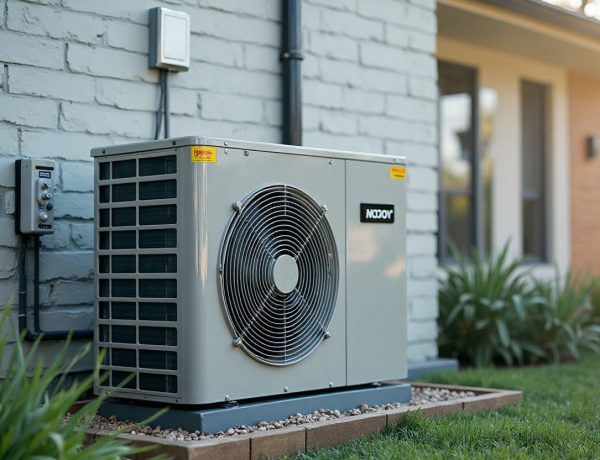
The Department of Energy says modern air-source heat pumps can cool homes efficiently in summer and are an energy-efficient alternative to traditional air conditioners and furnaces. ENERGY STAR also notes that a central air conditioner can often be replaced with a heat pump for a modest additional cost, and that doing so can allow a homeowner to eliminate or downsize a furnace.
That does not mean a heat pump is automatically the right answer for every house. It does mean homeowners should ask about it rather than assuming a like-for-like AC replacement is the only path. If you are already spending the money for major HVAC work, it makes sense to understand whether a different system type could improve efficiency and simplify the setup.
This is especially true when both cooling and heating equipment are aging together. Replacing one major component without considering the whole picture can lock you into another round of decisions sooner than you would like.
Installation quality can make a great system perform badly
A surprising number of homeowners focus almost entirely on brand or advertised efficiency. Those things matter, but not nearly as much as people assume if the system is poorly sized or poorly installed.
Both DOE and ENERGY STAR stress that installation quality is critical. Oversized equipment can short cycle. Improper refrigerant charging can increase energy use and raise the risk of system failure. Leaky ducts can waste conditioned air and undermine comfort. Correctly sized and matched equipment, based on load calculations and paired with a well-sealed duct system, is central to good performance.
This point is worth lingering on because it explains why some new systems disappoint people. They expected quieter operation, lower bills, and steadier temperatures. Instead, they got another unit that blasts on, shuts off quickly, and never quite settles the house. The problem was not necessarily that the equipment was bad. It may have been the wrong size, installed without enough attention to the actual load of the home, or connected to ductwork that was compromising performance from day one.
A homeowner shopping for replacement should care as much about the contractor’s process as the equipment proposal. If the sizing conversation feels rushed, that is a warning sign. If no one is talking about duct condition, that is another.
When repair still makes sense
Not every troublesome system needs immediate replacement. There are cases where a repair is still the reasonable decision.
If the equipment is not yet in the older range, the issue is isolated, and the system has otherwise been cooling and heating the home well, a repair can be a smart move. The same is true if a comfort problem is clearly tied to something that is not a core equipment failure.
The key is to look for pattern versus event. An event is a single problem. A pattern is repeated service calls, persistent comfort complaints, or ongoing operating costs that are moving in the wrong direction. Patterns are what push the decision toward replacement.
This is one of those judgment calls that cannot be reduced to one magic formula. Homeowners often want certainty, but what you are really weighing is confidence. Does this repair restore trust in the system for the next few years, or does it merely postpone an outcome that is getting more obvious?
How to think about replacement before you are forced into it
A calm replacement process looks very different from an emergency one. You have time to compare options, ask about sizing, think through your budget, and decide whether a heat pump belongs in the conversation.
A rushed process usually starts with a failure on a hot day. The house heats up fast, everyone is uncomfortable, and the main priority becomes getting cold air back as quickly as possible. That is how homeowners end up saying yes to whatever is available, rather than what is best.
If your system is showing several replacement signs, moving early has real advantages:
- You can schedule work before a full breakdown creates urgency.
- You can compare whether a standard AC replacement or a heat pump makes more sense.
- You can ask about load calculations, equipment matching, and duct sealing.
- You reduce the odds of needing emergency HVAC services during extreme weather.
- You give yourself a better chance at long-term savings from proper installation.
Those long-term savings are not trivial. ENERGY STAR says a properly installed high-efficiency system can save up to 20% on heating and cooling costs. Notice the wording there. Properly installed matters. High efficiency on paper is only part of the story. Real savings depend on the whole job being done well.
Why “bigger” is not better
One of the most stubborn myths in HVAC is that more capacity means more comfort. Homeowners sometimes ask for the biggest system they can afford because they are tired of feeling hot and want to make sure the next system can keep up.
The problem is that oversized equipment can create a new set of issues. ENERGY STAR warns that oversizing can shorten equipment life because of short cycling. Instead of delivering steady, controlled comfort, the system may satisfy the thermostat too quickly and shut off before the house is evenly conditioned. That can leave some rooms uncomfortable and put extra wear on components.
A well-sized system is not weak. It is appropriate. It is selected for the home’s actual needs, not for fear or guesswork. That is why load calculations matter so much in replacement planning. Comfort comes from proper design and installation, not brute force.
A word about ducts, because they are easy to forget
Homeowners tend to think about HVAC as the equipment they can see, or at least point to. But the ducts have a huge effect on results.
DOE specifically notes that leaky ducts can reduce efficiency and cause discomfort. ENERGY STAR recommends a well-sealed duct system as part of good HVAC performance. That means replacing equipment without evaluating the duct side of the system can leave a lot of value on the table.
If you have rooms that are always off temperature, or if an older system never seemed to perform as expected, the ducts should be part of the replacement conversation. Sometimes the real upgrade is not only the equipment itself but the way conditioned air is delivered throughout the house.
The best time to replace is usually before you desperately need to
There is no perfect day to spend money on a new HVAC system. But there are definitely better and worse moments to make the decision.
The worse moment is after a breakdown during a heat wave, when you are scrambling for emergency HVAC appointments and hoping someone can restore cooling before the house becomes miserable. The better moment is when the system is still operating, but the warning signs have become too consistent to ignore.
If your equipment is more than 10 years old, repairs are becoming frequent, energy bills are rising, and comfort is slipping, that is usually not bad luck. It is your system telling you it is nearing the point where replacement deserves serious thought.
And if you do replace it, do not think only about the piece of equipment being removed. Think about the home it serves. Ask whether a heat pump should be considered. Ask whether the sizing is based on actual calculations. Ask whether the ducts are in good enough shape to support the investment. Those questions are what separate a replacement that merely restores operation from one that actually improves daily life.
A good HVAC system should not be something you negotiate with all summer. It should quietly do its job, through hot afternoons, through stretches of 90-degree days, through the weeks when demand is highest and you need it most. When your current system can no longer offer that kind of reliability, comfort, and reasonable efficiency, the timing is usually telling you something. It may be time to stop repairing around the edges and start fresh with a system that is properly chosen, properly installed, and ready for the seasons ahead.